NUS vs NTU vs SMU: Masters in Singapore for Indian Students
Updated 2 November 2026 by the EDBGO counselling team, Chennai.
For a masters in Singapore for Indian students, the three autonomous universities most students compare are NUS (National University of Singapore), NTU (Nanyang Technological University) and SMU (Singapore Management University). NUS is the broadest and most research-heavy, NTU is especially strong in engineering, technology and business, and SMU is a specialist in business, economics, law and information systems with small, discussion-based classes. Most coursework master’s programmes take one to two years, and fees are set programme by programme. Examples for 2027 entry include NTU’s MSc Business Analytics at S$75,210, NUS’s MSc Business Analytics at S$87,550 and SMU’s Master of IT in Business at S$56,680 (all inclusive of GST).
This guide compares NUS vs NTU vs SMU for Indian students on programmes, fees, admission requirements, deadlines, work rights and jobs after graduation.
What this guide covers
NUS vs NTU vs SMU at a glance
| Factor | NUS | NTU | SMU |
|---|---|---|---|
| Profile | Comprehensive research university | Research university with strong engineering, science and business | Specialist city-campus university for business, economics, law, computing and social sciences |
| Popular master’s areas for Indian students | Business analytics, computing, engineering, data science, public policy, management | Business analytics, AI and computing, engineering, finance, communication | IT in business, quantitative finance, management, wealth management, applied economics |
| Teaching style | Mix of lectures, projects and research options | Mix of lectures and projects; strong industry links | Seminar-style, small classes, heavy participation |
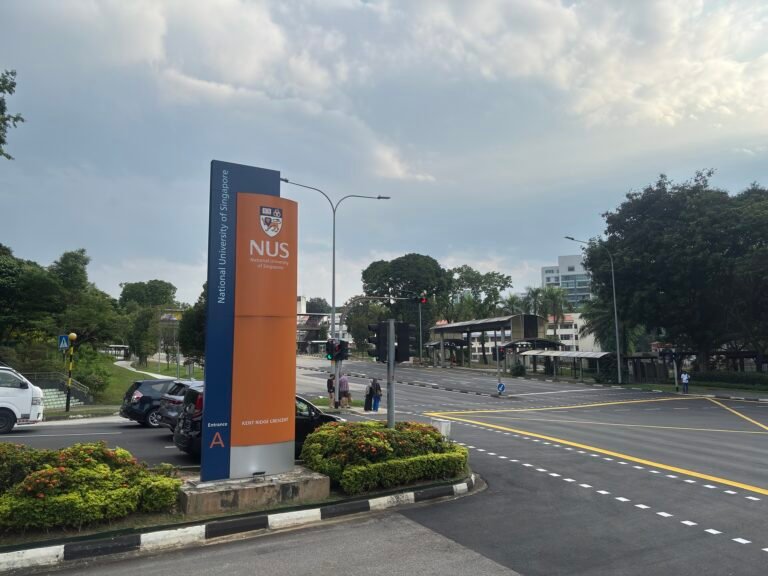
| Campus | Kent Ridge, west Singapore | Large campus in Jurong West | City centre (Bras Basah) |
All three are autonomous public universities. Rankings change every year, so compare the specific programme and its employment outcomes rather than relying on overall rankings alone.
Masters in Singapore fees: verified examples for 2027
| University | Programme | Fee (inclusive of GST) | Duration and intake |
|---|---|---|---|
| NUS | MSc in Business Analytics | S$87,550 (AY2027/28) | August intake; applications 5 October 2026 to 31 January 2027 |
| NTU | MSc Business Analytics (Nanyang Business School) | S$75,210 (July 2027 intake) | One year; rounds closing 30 November 2026, 31 January 2027 and 31 March 2027 |
| SMU | Master of IT in Business | S$56,680 | 12 to 24 months; August and January intakes |
Fees are set per programme and usually include GST at 9 percent, which is subject to revision. Engineering and computing master’s programmes may charge differently, so check each programme page. Living costs in Singapore depend heavily on accommodation; on-campus halls are usually cheaper than private rentals.
Admission requirements for Indian students
| Requirement | Typical expectation | Examples |
|---|---|---|
| Bachelor’s degree | Good honours-level degree in a related subject | NUS MSBA prefers business, computing, economics, engineering, maths, science or statistics |
| Maths ability | Strong quantitative foundation for analytics and finance | NUS MSBA asks for a strong mathematics foundation |
| GMAT or GRE | Varies: required, optional or highly recommended | NTU MSBA: optional; NUS MSBA: highly recommended; SMU MITB: GMAT, GRE or SMU Admissions Test |
| English | IELTS or TOEFL if your degree was not taught in English, depending on the programme | Check each programme’s English policy |
| Work experience | Not required for many MSc programmes; required for MBAs | NUS MSBA accepts a good degree or relevant work experience |
Intakes and deadlines for 2027
Most master’s programmes in Singapore start in July or August, with some January intakes. Applications for 2027 are already open, and the earliest rounds close from late November 2026. Scholarships often have earlier deadlines: for example, the NUS MSBA lists 15 December 2026 for a scholarship deadline. Apply in the first or second round for the best chance of admission and funding.
Part-time work and jobs after graduation
- During studies: according to Singapore’s Ministry of Manpower, full-time students at listed institutions, including NUS, NTU and SMU, can work up to 16 hours a week during term without a work pass, and without a weekly limit during vacations.
- After graduation: Singapore has no automatic post-study work visa. Graduates need an employer to sponsor a work pass such as the Employment Pass.
- Employment Pass salary: the minimum qualifying salary is S$5,600 a month for most sectors (S$6,200 in financial services), rising to S$6,000 (S$6,600) for new applications from 1 January 2027, with higher amounts for older candidates. Applications must also pass the COMPASS points framework (40 points).
This makes Singapore attractive for students who are confident of strong job offers in technology, finance or consulting, but riskier than countries with automatic post-study work visas.
NUS, NTU or SMU: which should you choose?
| If you want | Consider |
|---|---|
| The widest choice of programmes and research options | NUS |
| Engineering, AI or analytics with strong industry projects | NTU (and NUS) |
| Business, finance or IT management in small, interactive classes | SMU |
| A lower total fee | Compare programme by programme; SMU and some NTU programmes can cost less |
| Optional GMAT or GRE | Programmes like NTU MSBA where the test is optional |
Read our guides to studying in Singapore for a global career and study in Singapore after 12th for more on life and costs in Singapore.
FAQs on masters in Singapore for Indian students
How much does a masters in Singapore cost for Indian students?
Coursework master’s fees at NUS, NTU and SMU vary by programme. Verified 2027 examples range from S$56,680 (SMU MITB) to S$87,550 (NUS MSBA), inclusive of GST, plus living costs.
Is GMAT required for a masters in Singapore?
It depends on the programme. NTU’s MSc Business Analytics makes GMAT or GRE optional, NUS’s MSBA highly recommends it, and SMU’s MITB accepts GMAT, GRE or its own admissions test.
Can I work while studying in Singapore?
Yes. Full-time students at listed institutions such as NUS, NTU and SMU can work up to 16 hours a week during term and without a weekly limit during vacations.
Is there a post-study work visa in Singapore?
No. Graduates need a job offer and an employer-sponsored work pass, such as the Employment Pass, which has a minimum qualifying salary.
When should I apply for the 2027 intake?
Now. Many programmes have first-round deadlines between late November 2026 and January 2027, and scholarship deadlines can be earlier.
Official sources
- NUS: MSc in Business Analytics
- NTU: MSc Business Analytics admissions
- SMU: Master of IT in Business
- Ministry of Manpower: Work pass exemption for foreign students
- Ministry of Manpower: Employment Pass eligibility
Shortlist the right Singapore programme for 2027
With early deadlines and programme-specific requirements, Singapore rewards students who apply early with a sharp application. EDBGO counsellors in Chennai compare NUS, NTU and SMU programmes for your profile, plan GMAT or GRE if needed, and support your applications and Student’s Pass. Explore our study in Singapore page.
Book your free counselling session to plan your masters in Singapore.